Front facades and entry walls
Vertical castellated cladding around the front door creates an immediate sense of arrival.
Don’t miss your chance to visit us on Innovation Saturday, 13th June. Book an appointment now.
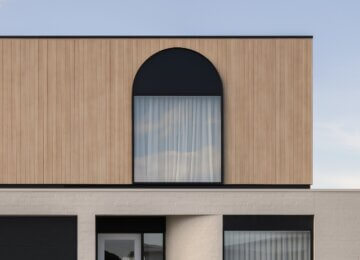
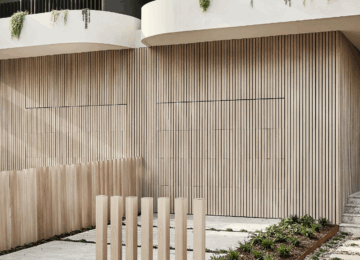
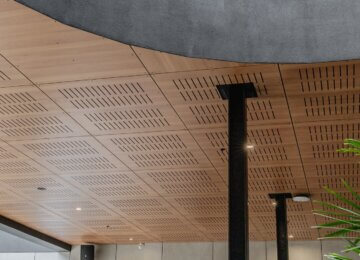
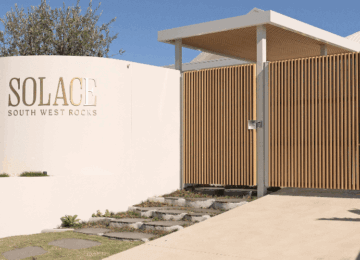
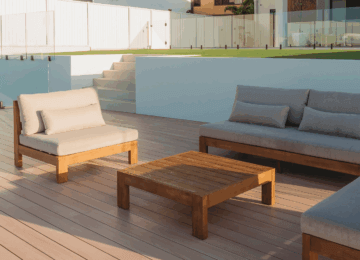
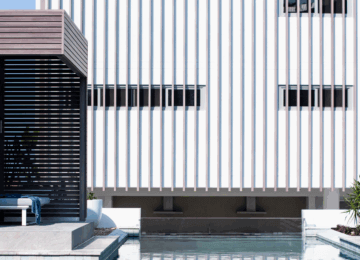
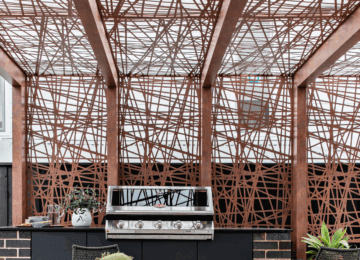
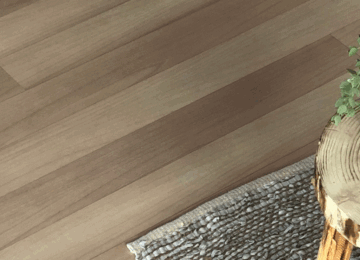
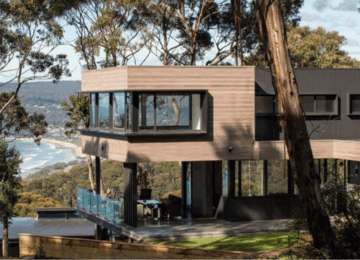
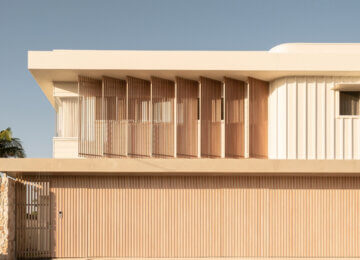
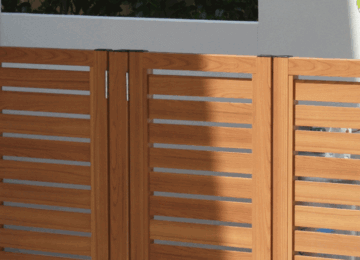
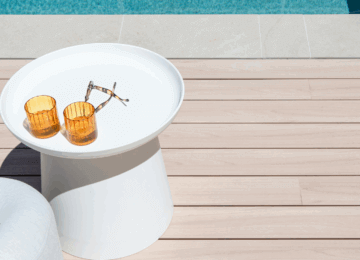
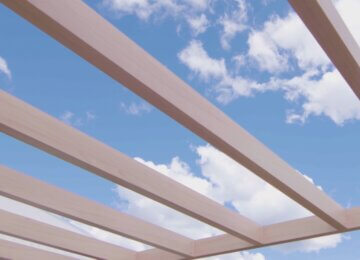
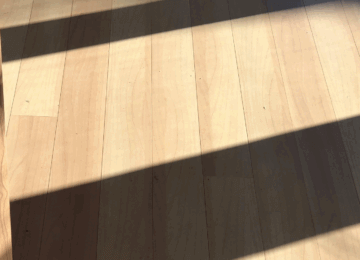
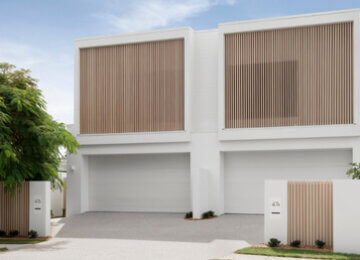

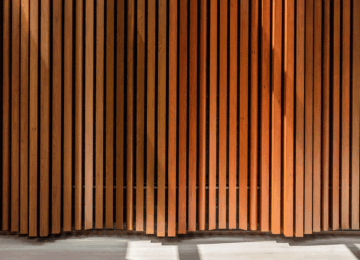
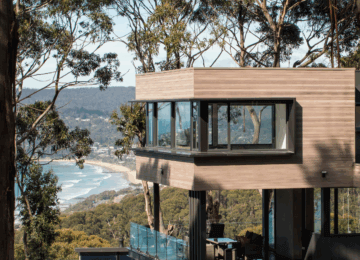
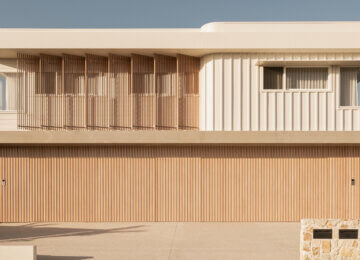
Castellated cladding has quickly become one of the most popular façade styles for modern Australian homes. Its distinctive ribbed profile adds depth and texture to exterior walls, creating a clean, contemporary look that changes throughout the day as light and shadow move across the surface.
From coastal homes in Byron Bay to new builds and renovations in Sydney, Brisbane and Melbourne, homeowners are choosing castellated cladding for its striking appearance and ability to add instant street appeal.
This guide:
We will also cover the new Castelline® cladding within our DecoClad® range and how the DecoBatten® SpaceBase® system creates a fully custom castellated cladding look with interchangeable battens.

Castellated cladding takes its name from the castle battlement pattern – a row of raised blocks with regular gaps between them. Applied to a wall, the shape creates a strong vertical or horizontal rhythm and a deep shadow line at every step. It creates a bold, geometric aesthetic suitable for today’s contemporary homes.
In Australia, castellated cladding is most often specified in three materials:
Aluminium has become a popular choice in Australia because it meets the National Construction Code (NCC) as a non-combustible material (DECO’s range have been tested and comply to AS 1530.1 and AS 1530.3), is low maintenance and can handle our UV and salt-spray conditions.
Not every “castellated” profile is the same. The board width, depth and castellation pattern change the look dramatically. Here is how the most common Australian castellated cladding profiles stack up:
| Profile | Board Width | Profile Depth | Look | Best For |
|---|---|---|---|---|
| Slimline castellated (Castelline®) | 75mm | 15mm | Sharp, narrow, modern | Facades, garage doors, feature walls, ceilings |
| Wide castellated | 150–200mm | 15–25mm | Bold, statement battlement effect | Facades, large gable ends |
| Custom batten castellated (DecoBatten®) | 25mm, 40mm, 50mm widths | 25–50mm | Fully customised spacing and multiple depth options | A personalised look across a range of applications. |
| Timber castellated | Varies | 18–25mm | Warm, natural, but requires upkeep | Heritage-inspired projects |
The Castelline® profile within our DecoClad® system is engineered specifically for the Australian market. The 75mm narrow board is lighter, more flexible, and easier to handle making installation effortless.
The DecoClad® Castelline® profile is DECO’s purpose-designed castellated cladding system.
It was designed for architects and homeowners who want to achieve a timber castellated cladding aesthetic but benefit from the long-term performance and reduced maintenance that aluminium provides.
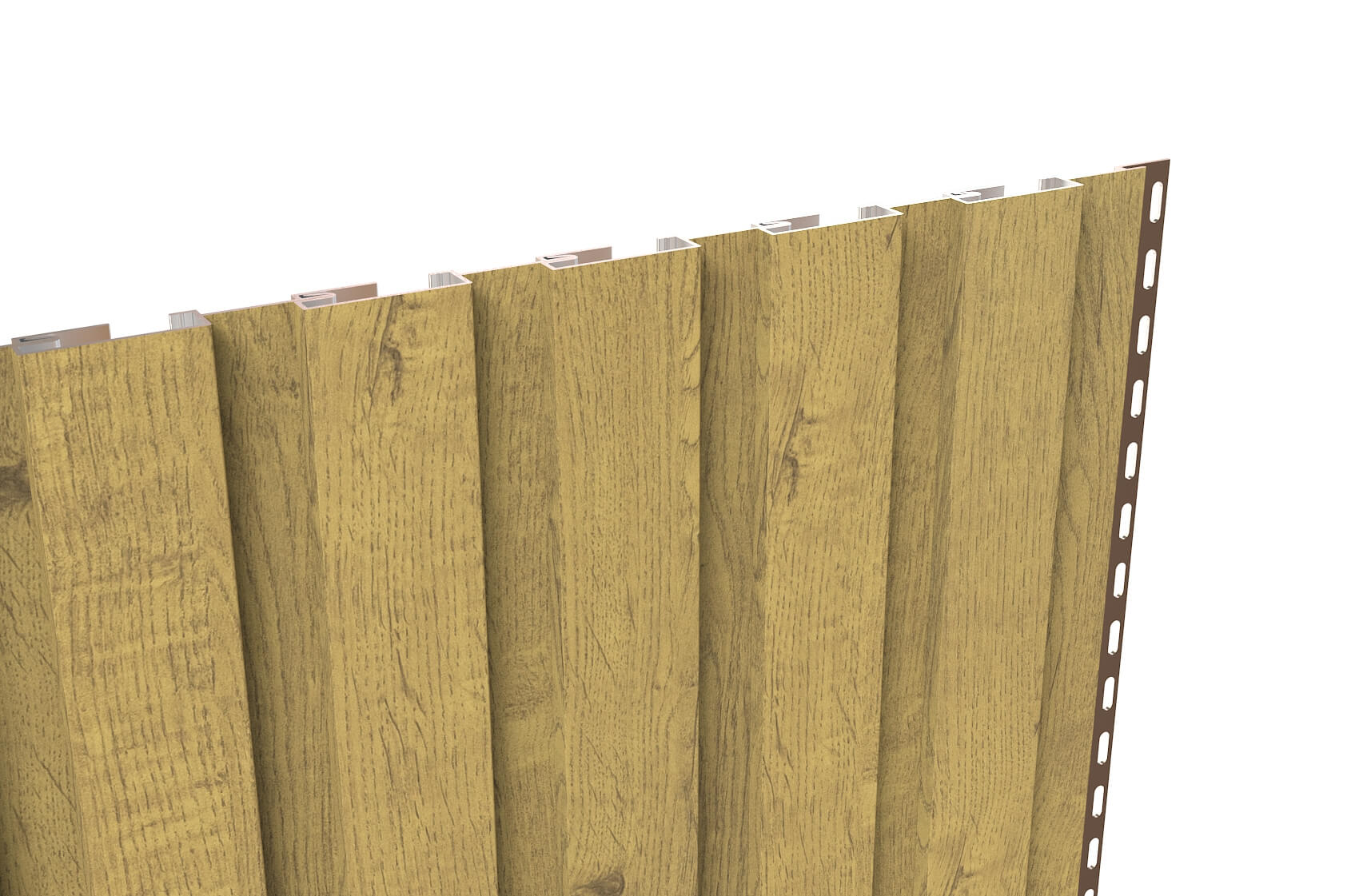
| Attribute | Detail |
|---|---|
| Profile Code | CL33 |
| Board Width | 75mm |
| Profile Depth | 15mm |
| Standard Length | 6.5m |
| Weight | 0.688 kg/m |
| Coverage | 0.483 m² per board |
| Material | Marine-grade aluminium |
| Finish | DecoWood®, DecoVogue™, DecoCoat® |
| Compliance | NCC non-combustible, AS 1530.1, AS 1530.3 |
Sometimes a project needs a castellated cladding look with completely custom spacing. That is exactly what the DecoBatten® SpaceBase® system was designed for.
The DecoBatten® QuickClick® two-piece system uses an aluminium base with a clip-on batten cover. Available in three size widths – the 25mm Series, 40mm Series and 50mm Series, with a range of base options including the SpaceBase®, designers can build a fully enclosed castellated cladding system that is unique to their project.
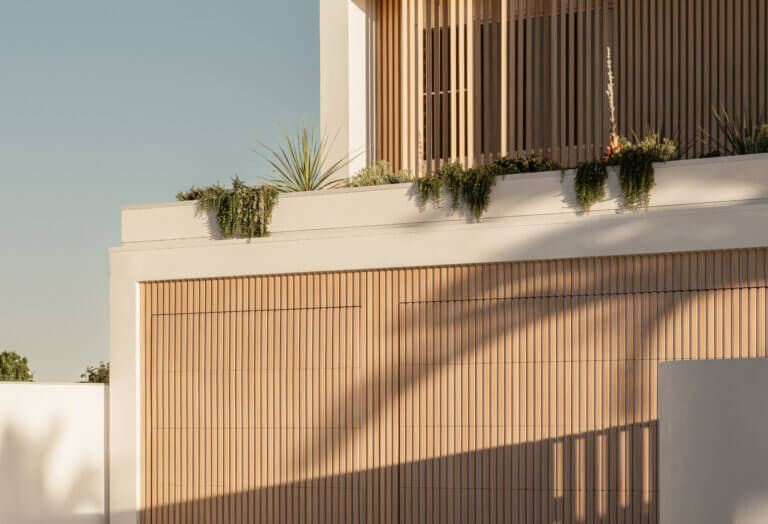

Pair a 50mm batten with 40mm or 25mm battens to create a varied castellated look.
The two-piece batten cover clicks directly over the base for no visible joins and a true timber batten look.
The QuickClick® system means no visible screws on the face of the cladding, producing a clean, architectural finish.
DecoBatten® is the right choice when you require control over every line; the DecoClad® Castelline® is the right choice when speed and a proven pattern matter most.
Castellated cladding is one of six profiles in our DecoClad® system. Choosing between them comes down to the look and the application.
| DecoClad® Profile | Width | Look | Best Use |
|---|---|---|---|
| Castelline® | 75mm | Slimline castellated | Feature walls, garage doors |
| Narrowline | 135mm | Recessed shadow line | Contemporary facades |
| V-Groove | 180mm | Refined VJ panel | Ceilings, soffits, interiors |
| Shadowline | 200mm | Wide shadow recess | Bold modern facades |
| Weatherboard 160mm | 160mm | Classic weatherboard | Classic, Heritage and Hamptons styles |
| Seamline™ | 205mm | Near-seamless flat | Minimalist, modern facades |
DECO offers free samples so you can access which cladding style is right for your project. Order a Free Cladding Sample here.
Castellated cladding cost in Australia depends on a few key things: the material, the profile width, the finish, the installation method, and the size of the wall.
When considering costs, it is critical to assess not just the up-front costs such as the material and labour costs, but also the long-term associated costs like ongoing maintenance, upkeep and potential replacement. Material utilisation and wastage also play a big part in the final costing.
Timber castellated cladding (hardwood) can start from $180 per m² but can often include higher installation costs and will almost certainly have higher wastage due to the material’s irregular nature such as knots and grain inconsistencies.
Aluminium castellated cladding will typically start from $350 per m², however material utilisation is more efficient thanks to the dimensionally stable boards and installation costs are kept down through the innovative design of the system. When finished in DECO’s Super Durable powder coat finishes, the ongoing maintenance costs are near nil with no chance of the aluminium rotting, warping or deteriorating.
To get a personalised quote for your castellated cladding project,
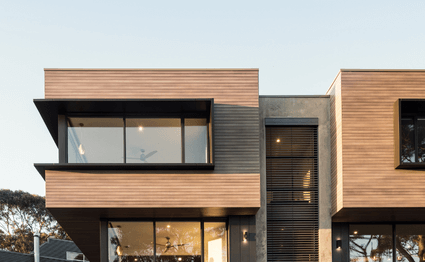
Vertical castellated cladding around the front door creates an immediate sense of arrival.

The Castelline® profile sits beautifully on a sectional garage door, lifting the whole streetscape.

Break up a tall wall with a castellated feature panel above standard weatherboard.

Used overhead, the rhythm becomes a textural ceiling pattern instead of a flat plane.

Castellated profiles on a courtyard wall give privacy without looking solid or heavy.
Most Australian homes use a timber or steel stud frame with a fire-rated sheathing such as cement sheet or rated plasterboard. The substrate must be flat, structural, and code-compliant.
Measure from the most visible corner. Use a level to mark a true vertical or horizontal datum.
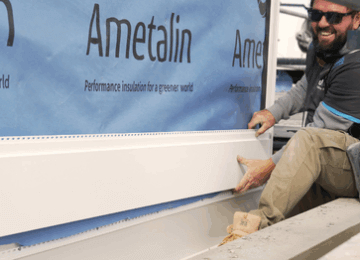
Fix the starter strip first, plus internal corners and external corners where needed. These accessories lock the boards in place and hide cut ends.
Slot each board into the previous one and fix it through the pre-punched holes. Pre-punched fixing slots on the Castelline® profile are a real time-saver because they take the guesswork out of fixing centres.
Fit drainage covers above any windows. Finish the run with end cover channels for a clean edge.
Walk the facade. Check shadow lines, corner alignment and finish consistency.
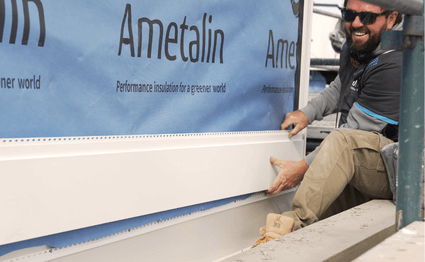
Always download the official DecoClad® Installation Guide before starting your project. It includes detailed diagrams for different application types, including accessories and installation details.
Even experienced builders run into trouble with castellated cladding because the geometric pattern is unforgiving. Here are the most common issues we help customers solve.
Castellated cladding from our DecoClad® range is engineered for Australian conditions and complies with:
AS 1530.1 — Combustibility test for materials
AS 1530.3 — Smoke, ignitability and flame propagation
AS 3837-G1 — Heat and smoke release rates
AS 4040.3 — Wind pressure resistance for cyclone regions
NCC Volume 1, Clause C.1.12 — Combustibility of materials
For projects targeting a lower-carbon outcome, ask your sales rep about LocAl® Green lower-carbon aluminium — independently verified to deliver up to 50% lower embodied carbon than standard primary aluminium.
For a wider view of the regulatory framework, the Australian Building Codes Board publishes the National Construction Code in full.
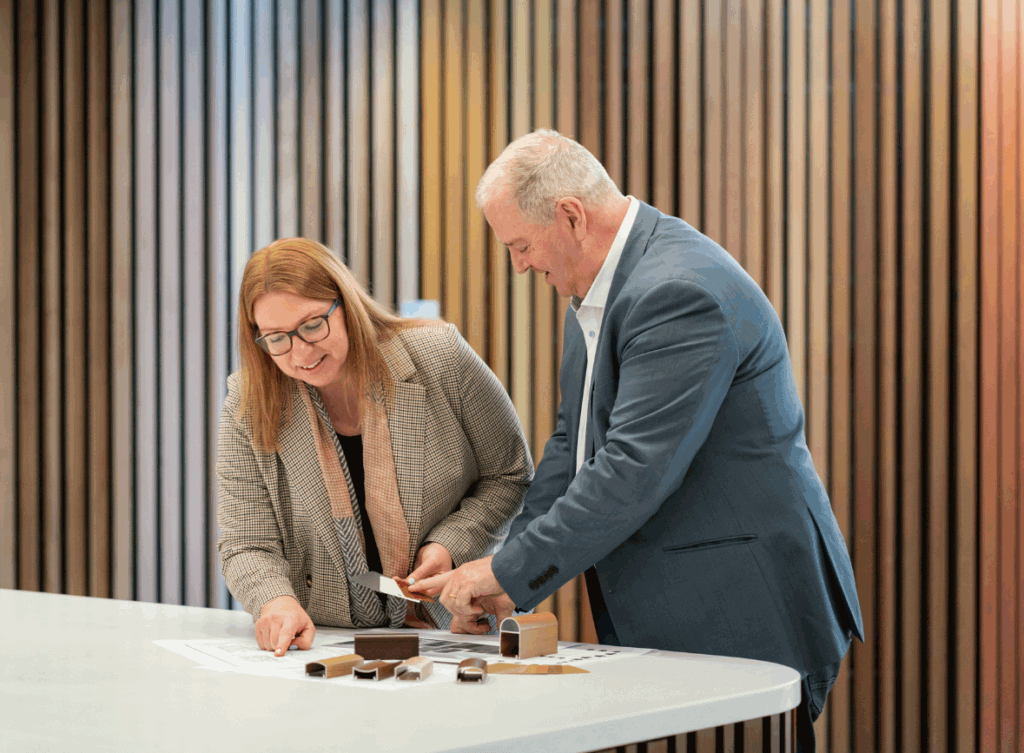
Ready to design your castellated cladding facade? Order a free Castelline® sample, request a quote for your project, or book a private appointment at the DECO Innovation Centre in Minto, NSW.

Modern castellated cladding in Australia is most commonly made from extruded aluminium with a powder-coated finish. Aluminium is non-combustible, lightweight and recyclable. Timber and composite versions also exist, but aluminium dominates because it suits Australian fire ratings as well as the UV and coastal conditions.
Supply-only prices for aluminium castellated cladding depend on profile width, finish and accessories required. Get your free quote here.
Aluminium castellated cladding such as DecoClad® Castelline® is certified non-combustible to AS 1530.1 and AS 1530.3 and complies with the NCC.Timber castellated cladding is combustible by nature and may be restricted in certain bushfire zones.
Yes. Castelline® and other DecoClad® cladding profiles are designed for both orientations. Vertical castellated cladding makes a wall feel taller and more contemporary. Horizontal castellated cladding gives a longer, more grounded feel and is ideal for single-storey homes.
Any builder or trade, or an experienced DIYer can install DecoClad® cladding using the official installation guide. For multi-storey or BAL-rated jobs, we strongly recommend engaging a DECO cladding installer.
Castelline® is a fixed-pattern castellated cladding board with a 75mm board width and 15mm depth. DecoBatten® is a modular batten system that lets you design a custom castellated pattern with different batten widths and spacing. Choose Castelline® for a fully enclosed cladding system; choose DecoBatten® for a fully bespoke look.
Aluminium castellated cladding from DECO Australia is engineered to last. The pre-treated aluminium substrate is strong, highly durable, and resistant to corrosion and will not rot or warp. The Super Durable™ powder coat finish offers a 12 year warranty suitable for coastal and city locations and only requires minimal maintenance to keep the finish looking great. In comparison, timber castellated cladding is prone to deterioration and typically needs re-oiling every 1-3 years to provide longevity.
Yes — DecoWood® finishes use a sublimation process to transfer a timber image into a powder-coated aluminium surface. The result is a castellated cladding board with the warmth of timber and the performance of aluminium. Popular finishes include Curly Birch, Casuarina and Coastal Spotted Gum.
Castellated cladding is a smart, contemporary facade choice for Australian homes, but only when the right profile is matched to the right project.
The Castelline® profile within our DecoClad® range gives you a proven, non-combustible system that installs quickly and performs in coastal, alpine and bushfire-prone areas. For projects that need a customised castellated pattern and spacing, the DecoBatten® QuickClick® system delivers.
Whichever direction you go, we recommend ordering a sample of your cladding board and finish to ensure it is the right fit for your project.